AG Neurocity, Ghospura Moar,opposite civil hospital, Jalandhar road, Batala
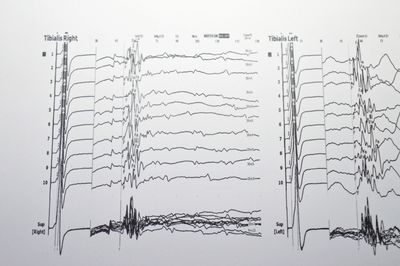
Understanding Your Nerve and Muscle Health
📌 What is Electromyography (EMG)?
Electromyography (EMG) is a diagnostic test that helps evaluate the health of your muscles and the nerves that control them. It is often used to detect neuromuscular disorders, such as nerve damage, muscle diseases, or problems with signal transmission between nerves and muscles.
🔍 Why Is EMG Done?
Your doctor may recommend EMG if you have symptoms such as:
- Tingling or numbness
- Muscle weakness
- Unexplained muscle pain or cramping
- Twitching (fasciculations)
- Difficulty with coordination or movement
🧪 What Conditions Can EMG Help Diagnose?
- Peripheral neuropathy (nerve damage due to diabetes, injury, etc.)
- Radiculopathy (nerve root compression, e.g., slipped disc)
- Carpal tunnel syndrome
- Myasthenia gravis
- Motor neuron diseases (e.g., ALS)
- Muscle diseases (e.g., myopathies, muscular dystrophy)
🏥 How Is EMG Performed?
- Preparation: No special preparation is needed. You may be asked to avoid applying lotion or oils to your skin on the day of the test.
- Procedure:
- A small, thin needle electrode is inserted into selected muscles.
- You may be asked to contract your muscle (e.g., bend your arm).
- The machine records electrical activity at rest and during contraction.
- A small, thin needle electrode is inserted into selected muscles.
- Duration: The test usually takes 30–60 minutes.
😷 Is EMG Painful?
You may feel mild discomfort or a pricking sensation during the test when the electrode is inserted, but the test is generally well tolerated and does not cause lasting pain.
✅ After the Test:
- You can return to normal activities immediately.
- Mild soreness may be present for a day but usually subsides on its own.
- Results are usually available within a few days and are interpreted by a neurologist.
👨⚕️ Where to Get EMG Done?
At AG Neurocity Hospital, we offer advanced EMG testing conducted by experienced neurologists using high-precision equipment.
You’ll be evaluated and guided by Dr. Atul Goel, a top-ranked neurologist with specialized expertise in nerve and muscle disorders.